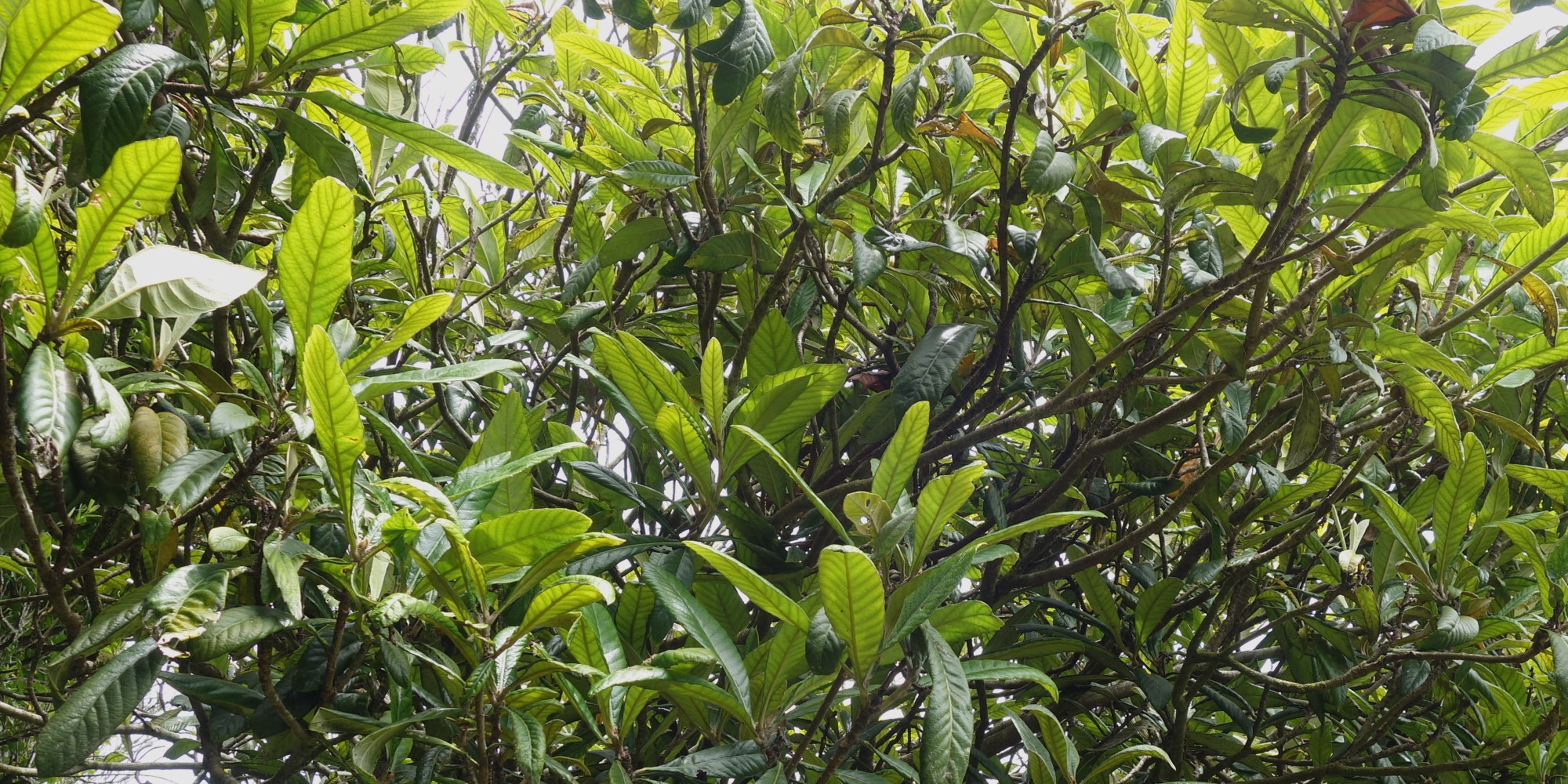
I’m pleased to write that I have finally managed to track down some sweet crabapple (Malus coronaria) fruit. Sweet crabapple is native to the northeastern United States and Canada, and is one of four apple species endemic to North America. Sweet crabapple is not named so because of its fruits, which are actually rather sour and bitter, but the flowers, which are reported to smell like roses. It is closely related to Malus ioensis and Malus angustifolia, the two other East coast endemic crabapples.
I have been interested in the native crabapples of North America for a few years. Pacific crabapple (Malus fusca) is of most interest to me because of its tolerance of wet soils, being able to grow in standing and even brackish water (!). These traits could be very useful for breeding apple rootstocks that don’t just tolerate wet soil, but thrive in it. I believe some unidentified crabapples in New Zealand are actually Pacific crabapple, so I believe it is here although I’ve never seen a recorded specimen (it is present on the Plant Biosecurity Index though).
Sweet crabapple was not a species I was originally interested in. However I came across an article mentioning how apple breeders in the USA are looking to use its later flowering trait to breed new apples that avoid late Spring frosts: https://www.michiganpublic.org/environment-climate-change/2025-01-20/a-key-to-protecting-apples-from-climate-change-might-be-hiding-in-michigans-forests
The article describes how sweet crabapple blooms about 2-3 weeks later in Michigan than Malus domestica. Sweet crabapples are beginning to become rare, and so they are working to preserve them before they are lost. They estimate it could take decades before these genes appear in commercial apple varieties.

One of the more severe effects of climate changes is that the weather will become increasingly erratic, such as late Spring frosts becoming more common. We don’t have much of a late frost problem on the West Coast here, but we have a related problem which is spring rain and wind that blow all the flowers off or prevent effective pollination. Usually it’s plums that suffer the worst of it, but apples can sometimes have poor crops too. So the ability to spread the flowering period of apples 2-3 weeks later could be very useful for food security.
What really stood out to me though was how sweet crabapple fruits can last a very long time outdoors without becoming rotten. As 18th century description from botanist Pehr Kalm noted:
“They lie under the trees all winter and acquire a yellow color. They seldom begin to rot before spring comes on”
This is the aspect that was most interesting to me, as I’m very interested in “super late apples” from the food security aspect. I suspect most of the super late apples in New Zealand come from a very narrow pool of genetics, and so it would be difficult to breed more out of them without additional genetics. By having a completely separate apple species that has its own set of “super late” genes, there is a lot more scope for breeding other apples that can last so late.

So here I was at an arboretum in the North island, scrounging around in the underbrush with a staff member looking for a tree that probably doesn’t get more than a few visits per decade. The trees there were all tall, with canopies far out of reach and out of sight. The search seemed fruitless. Soon however I spied some shining little green balls lying on the leaf litter, and I knew instantly that we’d found it.

The fruits were small, being roughly the size of a cherry. They have a sticky, waxy skin on them, like a really past-it old supermarket apple does. This was a bit surprising to me. I suspect this thick waxy layer is a key part of why the fruits can last so long.
The fruits themselves are strongly fragrant, with a scent similar to common apples but with much more of a floral character. It took me a while to make the connection, but they smell a lot like quince fruit. I’ve also probably smelled the same chemical before in certain soaps, but I tend not to eat soap so I can’t be too sure.
The fruits when chopped browned relatively quickly, which I found surprising. As for taste, they initially have a relatively clean tasting sourness that varies in intensity from as sour as a lemon to much less sour, based on the age of the fruit (older fruits are noticeably less sour). It will be interesting to taste them in a few weeks when they turn yellow. Surprisingly the taste is not very reminiscent of green apples – these have a much cleaner acidic taste. There is a light sweetness to the fruits, but it’s hardly noticeable compared to the sourness.
But the bitterness is the unique part of these fruits, with many fruit being as bitter as grapefruit juice. but closer to the taste of tonic water. As a marmalade lover I don’t shy away from bitterness and can appreciate a “good bitterness” and these fruits definitely had that, The floral scent is also experienced as a flavour that often blends into the bitter taste.
I also want to clarify that these crabapples are not particularly astringent (many people mix up the terms bitterness and astringent – including myself!) – they don’t really make your mouth dry up like eating an unripe astringent persimmon. Their mouth puckering ability is purely from being sour, like a lemon. Overall I found myself enjoying eating little slices of these – the bitterness was strangely compelling.
I researched the compounds in sweet crabapple and found that it can be extremely high in quinic acid. An astonishing 6.2% w/v of quinic acid (shown in the plot below as 62,000 mg/L = 62 g/L), a number substantially higher than all but a few other wild apple species tested in the study. This is more than twice the content of malic acid recorded from any apple species during the same study (~2.5% w/v), for context.
Quinic acid is best known as a key flavour component of roasted coffee beans, formed from the heat breakdown of chlorogenic acid. Taste wise quinic acid is lightly sour and moderately bitter. Maybe this explains why the sweet crabapple bitterness was pleasant to me – I love drinking black coffee!
Kiwifruit also contain quinic acid as well: “Mature fruit from Actinidia species contain a relatively high content of acid (1–2% w/w): 40–60% is quinic acid, 40–60% is citric acid and as much as 10% is malic acid. This high content of quinic acid makes kiwifruit novel as a fresh fruit“
(Despite the name, quinic acid is not structurally related to quinine, it should be noted)

Sweet crabapple is actually not too uncommon in New Zealand, but is found almost exclusively as the ‘Charlottae’ cultivar grown as a flowering ornamental, which has a double shell of flowers. ‘Charlottae’ is reported to be a poor fruiter with small crops however. I also wasn’t sure if the ‘Charlottae’ cultivar is representative of wild Malus coronaria or not. Is it a strange mutant, a pentaploid perhaps or maybe it’s a hybrid? Hybrid crabapples are often apomictic (= mother tree clones itself via seed) tetraploids, and so then they are not as useful for breeding.
After more research it turns out, practically all populations of Malus coronaria are tetraploids, with very high rates of apomixis as well (about 75% or so), and so it seems many of the seedlings I’ll end up with will be clones of the mother tree. This is a double-edged sword. On the one hand, I absolutely could not reach up to get scionwood of the mother tree as I think the canopy was only starting at about 6 metres height, so apomictic seedlings means we’ll have the exact mother plant represented in seedlings (rather than seedlings hybridized by random crabapples that may bring unfavourable traits). Similarly by identifying a high proportion of seedlings as being apparently identical, we can be sure that the parent tree is actually Malus coronaria and not a related species such as Malus ioensis or Malus angustifolia (both are primarily diploid and reproduce zygotically, so their seedlings will all vary).
On the other hand, it means breeding with them will be difficult. Most seedlings will be apomictic clones, and the F1 hybrids would mostly be triploids, and then their offspring will be also mostly triploids and tetraploids. Getting back to a diploid is probably best for incorporating into a normal apple breeding program, but I’m not yet sure how to detect those among other seedlings. Often leaf thickness can be a clue as to ploidy though, with triploids usually having 20-30% thicker leaves than diploids (and tetraploids thicker again), so maybe finding a thinner leafed seedling would indicate a diploid.
Hybrids between Malus coronaria and M. domestica are named as Malus x platycarpa. These hybrids have larger fruits (to about 5cm diameter), and larger leaves than the parent.

Lastly, sweet crabapple was in previous centuries used as rootstock where it became renowned for its hardiness. It’s still occasionally used now by amateur gardeners. Sweet crabapple seems to be able to handle relatively wet soils while remaining a small tree, and with practically no suckering, so perhaps it is useful as a rootstock as is. The apomictic behaviour could also be useful if sweet crabapple is used as rootstock, as the uniformity of the seedlings is also one of the useful traits for Citrus trifoliata rootstock.
For now the next steps are to try and sprout these seeds, and to see how long the rest of the fruit last, and what they taste like after as much storage as possible. As always, anyone who is interested can get in contact with me.
References
- https://www.michigannativeapples.org/about
- https://www.michiganpublic.org/environment-climate-change/2025-01-20/a-key-to-protecting-apples-from-climate-change-might-be-hiding-in-michigans-forests
- Keeler, Harriet L. (1900). Our Native Trees and How to Identify Them. New York: Charles Scribner’s Sons. pp. 133–5
- https://blogs.cornell.edu/master-gardeners-cce-oc/2021/06/30/tree-of-the-month-sweet-crabapple-tree/
- https://pomiferous.com/applebyname/malus-coronaria-id-8280
- Zambiasi G, Solovyev P, Degasperi M, Busatto N, Guerra W, Bontempo L, Troggio M, Farneti B, Costa F. Primary metabolite profiling by NMR reveals the key role of sugars and organic acids in driving the domestication process in apple. Scientia Horticulturae. 2026 Feb 1;357:114681.
- Marsh KB, Boldingh HL, Shilton RS, Laing WA. Changes in quinic acid metabolism during fruit development in three kiwifruit species. Functional Plant Biology. 2009 May 6;36(5):463-70.
- https://www.treesandshrubsonline.org/articles/malus/malus-cultivars-c/#17161
- Kron, Paul; Husband, Brian C. . (2009). Hybridization and the reproductive pathways mediating gene flow between native Malus coronaria and domestic apple, M. domestica. Botany, 87(9), 864–874. doi:10.1139/b09-045
- https://www.treesandshrubsonline.org/articles/malus/malus-x-platycarpa/
- https://commons.wikimedia.org/wiki/File:Addisonia_-colored_illustrations_and_popular_descriptions_of_plants(1916-(1964))_(16771741102).jpg